


Rusty Lake: Roots
Rusty Lake
I went into Rusty Lake: Roots expecting a compact point-and-click adventure, but what stayed with me was the way it turns a family history into a chain of strange, carefully connected puzzles. It is an adventure game from Rusty Lake, built around exploring scenes, examining objects, and working out what each unusual situation is asking me to do. The tone is immediately distinctive: quiet, unsettling, sometimes morbid, and often unexpectedly funny.
The basic idea is easy to understand. You follow a family across different moments, gradually expanding its story by completing self-contained scenes. That structure makes it approachable in short sessions, yet the connections between characters and events give the whole experience more weight than a collection of unrelated puzzles. I found myself paying attention not only to the next solution, but also to how one small action seemed to affect the larger family tree.
It is listed as a paid game at $2.99, so the value question is pleasantly straightforward: access is not presented as a free download that depends on guessing what is locked behind it. For that asking price, the important issue is whether you enjoy this particular style of puzzle adventure. If you prefer atmospheric exploration and lateral thinking over fast movement or combat, the purchase makes much more sense.
A strange family story told through puzzles
How the structure works in practice
The game does not treat its family tree as a decorative theme. It uses that idea to organize the adventure. I move through scenes tied to different relatives and periods, and each scene gives me a small problem to solve. The immediate objective may involve finding an item, arranging objects, understanding a visual clue, or combining actions in the right order. Once I stop looking for conventional adventure-game logic, the rhythm becomes much easier to appreciate.
What makes the design effective is the separation between local and wider goals. A single scene can usually be understood on its own, but the characters and recurring imagery encourage me to see the entire family as one connected mystery. This is useful when I want a short play session: I can focus on one puzzle without needing to remember a huge inventory or a complicated control system. It also rewards returning later, because a detail that seemed merely bizarre can acquire more meaning after another scene.
Related News






The point-and-click format is particularly well suited to the material. Instead of asking me to master timing, movement, or combat, it asks me to observe. I tap around the environment, test suspicious objects, and look for relationships between what I can see and what the scene is implying. That slower pace lets the visual design and unsettling atmosphere do much of the work.
The atmosphere is the real hook
Rusty Lake: Roots has a deliberately odd personality. Its world is not trying to be realistic or comforting, and the family theme is filtered through imagery that can feel surreal, grim, or darkly playful. I would not recommend it to someone who wants a cheerful casual game, even though the controls are simple. The Teen content rating is a useful signal that the mood and subject matter are aimed at older players rather than young children.
I liked the contrast between the calm presentation and the uncomfortable events. The scenes often look still and controlled, which makes unusual discoveries more effective. There is no need for constant spectacle; a strange object placed in the wrong context can create more tension than a loud effect. That restraint is one reason the game feels different from a typical mobile adventure.
Gallery
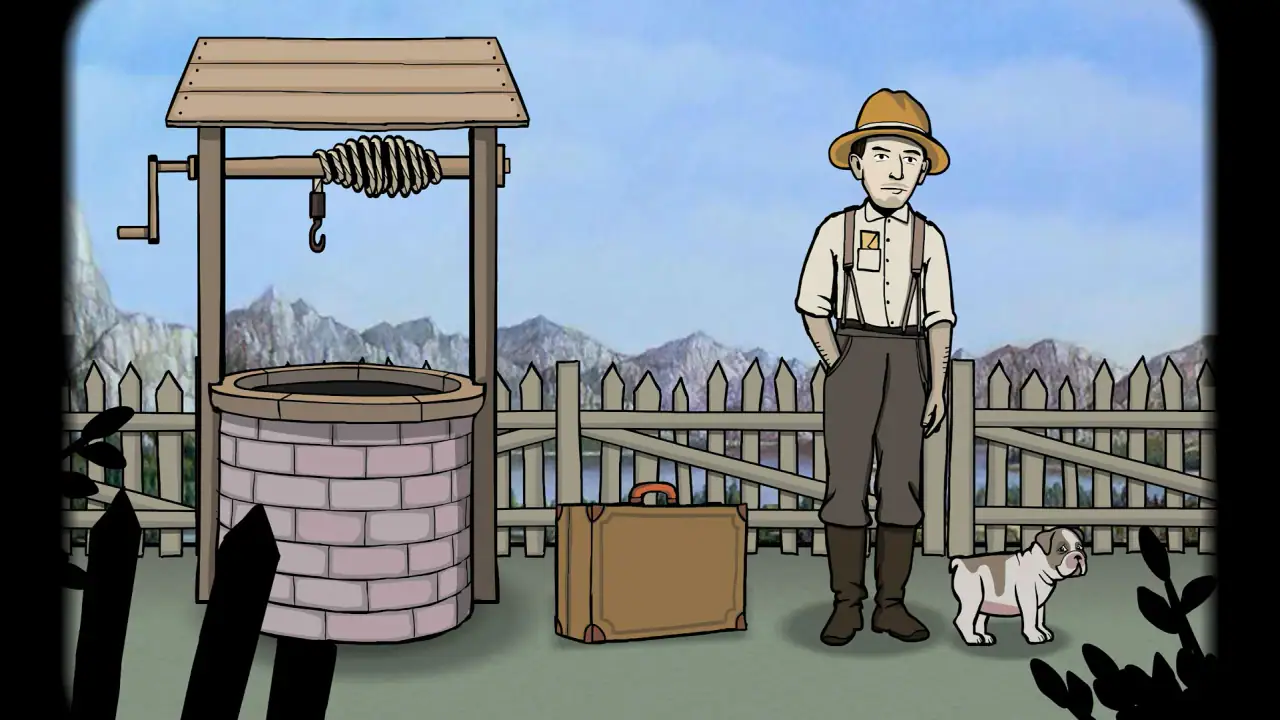
The family-tree framing also gives the story a sense of progression without relying on long stretches of dialogue. I am not simply moving from one random room to another. Each solved scene contributes to a growing picture of the family, and that makes even a small interaction feel like part of a larger pattern. Players who enjoy piecing together implied stories will probably get more from this than players who need every plot point explained directly.
What solving a puzzle actually feels like
The puzzles are best approached with curiosity rather than brute force. When I get stuck, repeatedly tapping everything is rarely as useful as stepping back and asking what the scene is emphasizing. A character’s position, an unusual object, or a repeated visual detail may be more important than the most obvious item on screen. I found it helpful to inspect the whole scene first, then test actions in a deliberate order instead of clicking randomly.
One practical habit makes a noticeable difference: I keep track of relationships between objects, not just individual clues. If a scene presents several items that seem unrelated, I ask what transformation, sequence, or interaction could connect them. This mindset is more productive here than searching for a single highlighted hotspot. It also reduces the frustration that can come from trying every possible tap without understanding the puzzle’s internal logic.
Another useful approach is to treat unusual outcomes as information. In a conventional adventure game, an unexpected result may feel like failure. Here, the game’s surreal logic means that an odd reaction can reveal the correct direction. I learned to pay attention to what changed after an action, even when the result looked grotesque or absurd. That is a small but important adjustment for anyone coming from more literal puzzle games.
Playing on a phone or tablet
The touch-based format suits short, focused sessions. I can play while taking a break, solve part of a scene, and stop without needing to remember a complicated control scheme. The game’s visual puzzles also benefit from a larger screen, so a tablet may be more comfortable for players who find small objects difficult to inspect on a phone. That is not a reason to avoid the mobile version, but it is worth considering if you often play with compact text or detailed illustrations.
I would not choose this as background entertainment while watching television. The game depends on noticing small details and remembering what I have already tested. Splitting my attention made the puzzles feel harder for the wrong reason. A quiet commute, a late-evening session, or a dedicated twenty-minute break works better than trying to play while multitasking.
The current version is 3.1.6, and the listed minimum operating-system requirement is Android 6.0. That makes it accessible to a broad range of older Android devices, although actual comfort will still depend on screen size and how easily a particular phone handles visual interactions. The experience is designed around tapping and observation rather than demanding high-end graphical performance.
Where the paid price earns its keep
At $2.99, I see the game as a focused purchase rather than an endless-service product. Its value comes from the authored puzzles, the unusual presentation, and the satisfaction of seeing the family tree develop. I am paying for a complete-feeling adventure experience, not for a competitive system that needs daily participation. That distinction matters when comparing it with free puzzle apps that are built around repeated rounds or ongoing engagement.
The price also changes how I judge the game’s pacing. I do not need dozens of modes or constant content updates for this kind of purchase. I want the existing scenes to feel purposeful and memorable, and they generally do. The game’s strongest moments come from the combination of puzzle solution and story implication, not from quantity alone.
There is still a trade-off. A player who only wants five-minute distractions may feel that the purchase delivers less immediate variety than a free collection of simple puzzles. Someone who dislikes being stuck may also find the value harder to recognize, because the enjoyment depends on eventually understanding the intended logic. I would rather pay for this concentrated style than spend time with a free alternative that interrupts the experience, but that is a preference, not a universal rule.
What may frustrate new players
The biggest friction is that the game does not always explain how literal or abstract a clue is meant to be. Some puzzles reward careful observation, while others ask me to accept the game’s peculiar internal rules. That inconsistency is part of the charm, but it can also make a solution feel less satisfying when I have tried several reasonable actions and none works.
I also had to accept that the story is not delivered like a conventional narrative adventure. The family’s history is assembled through scenes, objects, and implications. If I want clear exposition, extensive character conversations, or a neatly explained timeline, this may feel too cryptic. The game trusts me to interpret what I see, and that trust will either feel inviting or withholding depending on my taste.
The dark material is another genuine consideration. The game’s strange family situations can be unsettling, and its Teen rating should not be treated as a guarantee of a light puzzle experience. I would skip it for a child looking for a harmless cartoon adventure, even though the interface itself is easy to use. The mature tone is woven into the puzzles rather than added as a separate layer.
There is also no advantage in rushing. I found that impatience made the game seem more opaque. When I tapped quickly through a scene, I missed relationships that became obvious after a slower inspection. This is a poor match for players who want immediate feedback from every action, but a good fit for someone who enjoys sitting with a visual problem until its pattern emerges.
How it compares with more familiar adventure games
Compared with story-heavy adventure games, this one is more compact and less dependent on dialogue. I spend more time reading the environment than listening to characters explain their motives. Compared with hidden-object games, it asks for more interpretation: the important clue may be how objects relate rather than simply where an item is located. Compared with escape-room puzzle apps, it has a stronger continuing identity because the scenes are connected through the family.
Those comparisons also show when another option might be better. Choose a traditional narrative adventure if you want a clearly stated plot and character-driven conversations. Choose a casual hidden-object game if you prefer obvious targets and quick completion loops. Choose a more action-oriented adventure if exploration for you means movement, danger, and reflexes. Rusty Lake: Roots is strongest in the narrower space between visual mystery, surreal storytelling, and point-and-click problem solving.
Its audience response supports the idea that the format has found its people: the game holds a 4.7 average from around 16 thousand ratings, with over 100 thousand installs. Those figures do not make it universally suitable, but they do suggest that its unusual approach is not merely a novelty. I can understand the appeal because the game commits fully to its tone instead of trying to imitate a generic mobile puzzle title.
Who will get the most from it
I would recommend it to players who enjoy noticing patterns, interpreting visual clues, and gradually assembling a story from fragments. It is especially suitable for someone who wants an adventure that can be played in small sessions but still feels connected from one scene to the next. The paid model is also a good fit for a player who prefers a direct purchase over a free game whose value depends on repeated daily use.
It works well as a shared puzzle experience too. I can imagine playing a scene with a friend, passing the phone back and forth, and discussing whether an object is a clue or merely part of the unsettling scenery. That kind of cooperation is informal rather than built around competition, but the game’s visual design makes it easy to talk through possibilities together. It is a particularly good choice for people who enjoy saying, “Wait, what happens if we try this?”
I would skip it if I want relaxing puzzles with a bright, reassuring presentation. I would also skip it if I become angry whenever a game refuses to explain the next step. The same ambiguity that makes the experience memorable can make it feel unfair to someone who prefers explicit instructions. Players looking for a long-term progression system, fast action, or a large open world should spend their money elsewhere.
My buying recommendation
For me, the purchase is justified because the game has a clear identity and uses its family-tree concept to connect atmosphere, story, and puzzle design. It is not trying to be a universal adventure game, and that is a strength. The $2.99 price feels reasonable when I approach it as a concentrated, paid point-and-click experience rather than as an endlessly replayable app.
My advice is to start when you can give the screen your full attention, resist random tapping, and allow the strange logic to reveal itself. If you are stuck, inspect the entire scene again and focus on relationships between objects rather than searching for a single obvious button. That small change in method can turn frustration into the satisfying moment when the puzzle suddenly makes sense.
Rusty Lake: Roots is therefore an easy recommendation for fans of surreal mysteries and thoughtful mobile adventures, but not a universal one. Its Teen-rated atmosphere, cryptic presentation, and occasional friction are central to the experience, not minor details to overlook. If those qualities sound appealing, this is a memorable paid game with enough personality to stand apart from ordinary puzzle apps. If they sound tiring, the usual lighter alternatives will probably offer better value for you.
Rusty Lake: Roots was released on October 20, 2016, and the work still feels deliberately composed rather than disposable. Rusty Lake has built the adventure around mood and connection, giving each solved scene a place in a larger, unsettling family story. I would buy it for a quiet evening, a focused break, or a shared puzzle session with someone who enjoys unusual ideas. I would not buy it for speed, simplicity, or cheerful comfort—and knowing that distinction is the key to deciding whether it belongs on your device.
FAQs for Rusty Lake: Roots
What is Rusty Lake: Roots about?
Rusty Lake: Roots is a point-and-click adventure game centered on the Vanderboom family and the mysterious events surrounding their lives. You explore a series of connected chapters, solve environmental puzzles, collect objects, and uncover a strange family history. The game focuses more on atmosphere, symbolism, and discovery than on traditional action or fast-paced gameplay.
Is Rusty Lake: Roots suitable for children?
Although Rusty Lake: Roots uses a simple, illustrated art style, its themes are not designed specifically for young children. The story includes death, disturbing imagery, unusual family events, and dark psychological elements. Younger players may also find some puzzles confusing or unsettling. Parents should review the game’s content and consider the child’s age and sensitivity before allowing them to play.
Does Rusty Lake: Roots require an internet connection?
Rusty Lake: Roots is primarily a single-player offline adventure, so you can generally play its main content without a constant internet connection. An internet connection may still be needed to download the game, install updates, restore purchases, or access platform services. Once installed, it is well suited to playing during travel or in places where mobile data and Wi-Fi are unavailable.
How difficult are the puzzles in Rusty Lake: Roots?
The puzzles range from straightforward object-based challenges to more obscure logic problems that require careful observation. The game does not usually explain exactly what to do, so examining every scene and remembering visual clues is important. Some solutions may feel unusual rather than perfectly logical, but experimentation and revisiting locations usually help. Players looking for a relaxed mystery experience should find the difficulty manageable.
Is Rusty Lake: Roots worth downloading?
Rusty Lake: Roots is worth considering if you enjoy atmospheric point-and-click adventures, surreal storytelling, and puzzle solving without combat. Its strongest features are the distinctive visual style, interconnected family narrative, and large collection of short chapters. However, players who prefer realistic stories, clear explanations, or action-focused gameplay may not enjoy its strange tone and occasionally cryptic solutions. It is best suited to patient fans of unusual mysteries.
Pros
- Distinctive hand-drawn art creates an eerie
- memorable atmosphere.
- Short chapters make it easy to play in brief sessions.
- Hints are available when a puzzle leaves you stuck.
- Family-focused story adds emotional depth beyond typical puzzles.
- Runs smoothly on most modern Android and iOS devices.
Cons
- Some solutions rely on obscure visual clues rather than logic.
- The unsettling themes may not suit younger or sensitive players.
- Progress can feel repetitive when revisiting the same locations.
- A few item interactions are easy to overlook on small screens.
- The full experience requires a paid purchase with no free version.


